What does a rooftop solar energy system mean for your brand?
The solar energy system on the roof of HC Organize Tekstil's facility has an installed capacity of 611 kWp and generates 780,000 kWh of electricity a year, more than the facility consumes in a year. We explain the difference between kWp and kWh, what "more than the facility consumes" compares, and how you can use the figures in your supply chain report.

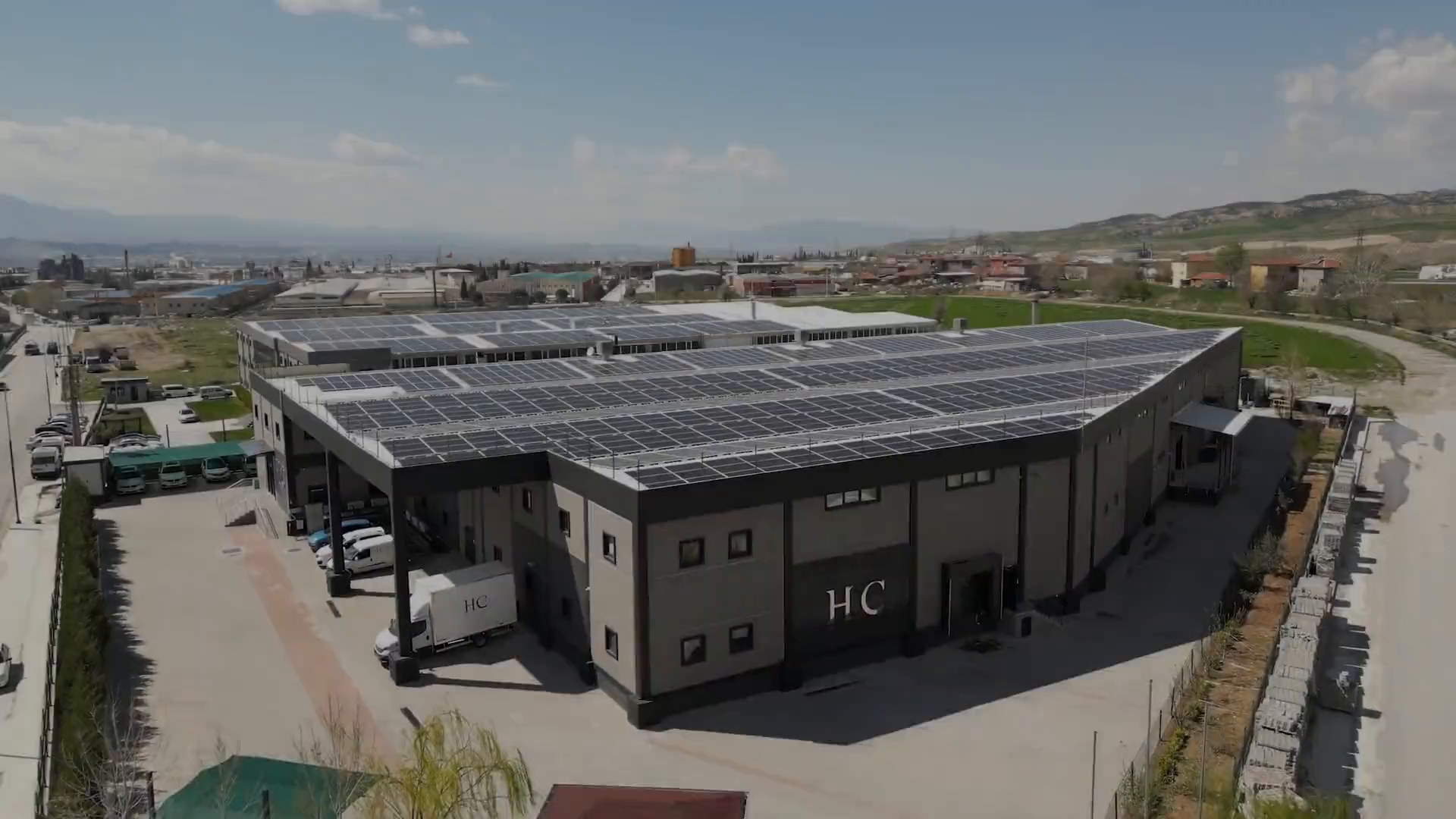
The roof of HC Organize Tekstil's facility in the Honaz Organised Industrial Zone, Denizli, carries a solar energy system with an installed capacity of 611 kWp. The system generates 780,000 kWh of electricity a year; this is more than the facility consumes in a year, and the surplus is fed into the grid. For a brand that has its products made with us, this means two concrete figures for the energy side of the facility in its supply chain report.
Below we explain what these two figures describe, what "more than the facility consumes" compares, and what to keep in mind when you use the figures in a report.
How much electricity does the rooftop system generate?
The system has an installed capacity of 611 kWp and generates 780,000 kWh a year. The panels are on the facility roof, and the electricity they generate is used in the facility. Generation above consumption is fed into the regional electricity grid.
The two figures do not say the same thing. One describes the size of the system, the other the energy it produces over a year. This is the point that is easily confused in reports.
What is the difference between kWp and kWh?
kWp (kilowatt peak) is the rated power of the panels under standard test conditions. It shows how large a system was built; it is a measure of capacity. Two systems with the same installed capacity can generate different amounts of electricity depending on their location and hours of sunshine.
kWh (kilowatt-hour) is the amount of energy generated or consumed over a period of time. 780,000 kWh is the total electricity the system generates over a year. It is also the figure that can be compared with the facility's consumption, because consumption is measured in kWh too.
In a report, "611 kWp" can go on the installed capacity line and "780,000 kWh" on the annual generation line. Showing both on one line, or using one in place of the other, changes what the figure means.
What does "more than the facility consumes" mean?
The comparison is made on annual totals: the system's annual generation is above the facility's annual consumption. The surplus generation is fed into the grid.
Within a single day the picture is not fixed. The electricity drawn from the grid and fed into it changes from hour to hour; generation depends on the sun, consumption on the work in the facility. The statement therefore describes the balance over a year, not a moment in time. Writing it the same way in your report makes the figure easier for readers to interpret correctly.
How can you use these figures in your brand's report?
The energy section of your report can include two figures for the facility: 611 kWp as installed capacity and 780,000 kWh as annual generation. You can add that "annual generation is above the facility's annual consumption, and the surplus is fed into the grid".
Three points are worth keeping in mind when you use the figures:
- The figures are at facility level. They belong to the whole facility; they are not divided between individual orders or products.
- Installed capacity and generation are reported separately. 611 kWp is a capacity; 780,000 kWh is an annual quantity.
- The source can be cited. The figures are published on our Renewable Energy page, and you can link to that page in your report.
Is the solar energy system a certificate?
No. The solar energy system is not a certificate but the facility's own investment. Organic or recycled content is certified with GOTS, OCS, GRS and RCS Blended. The test for harmful substances is OEKO-TEX Standard 100. Social compliance is shown through amfori BSCI and Sedex SMETA audits. Our certificates and the scope of each are set out on our certifications page, and the raw material side on our Fibres and Raw Materials page.
In a report, energy figures and certificates sit under separate headings: one describes the facility's electricity, the other the certified characteristics of the product and the facility.
The continuity of certification and audit processes is the responsibility of the Sustainability Department, which we founded in 2014; the department also monitors the efficient use of resources within the company.
Frequently asked questions
What are the system's installed capacity and annual generation?
Installed capacity is 611 kWp, and annual generation is 780,000 kWh.
Does the facility get all its electricity from the sun?
The comparison is made on annual totals: annual generation is above the facility's annual consumption, and the surplus is fed into the grid. Within a day, the electricity drawn from and fed into the grid changes from hour to hour.
Can we use these figures in our supply chain report?
Yes. 611 kWp installed capacity and 780,000 kWh generated a year are the figures you can use for the energy side of the facility. You can cite our Renewable Energy page as the source.
Can the solar energy system replace a certificate?
No. The system is the facility's own investment; fibre content, harmful substances and social compliance are shown with separate certificates. We send current certificates on request.
Request a quote
A tech pack and a target quantity are enough for a quote. Describe your product group and your product in our quote form, and if your report needs energy or certificate information, add a note about that too.