

GOTS vs OCS: which certificate does your brand need?
GOTS and OCS both verify organic fibre, but they certify different things and set different thresholds. What each covers, how to choose between them, how the scope certificate and Transaction Certificate work, and which of our product groups are within scope.
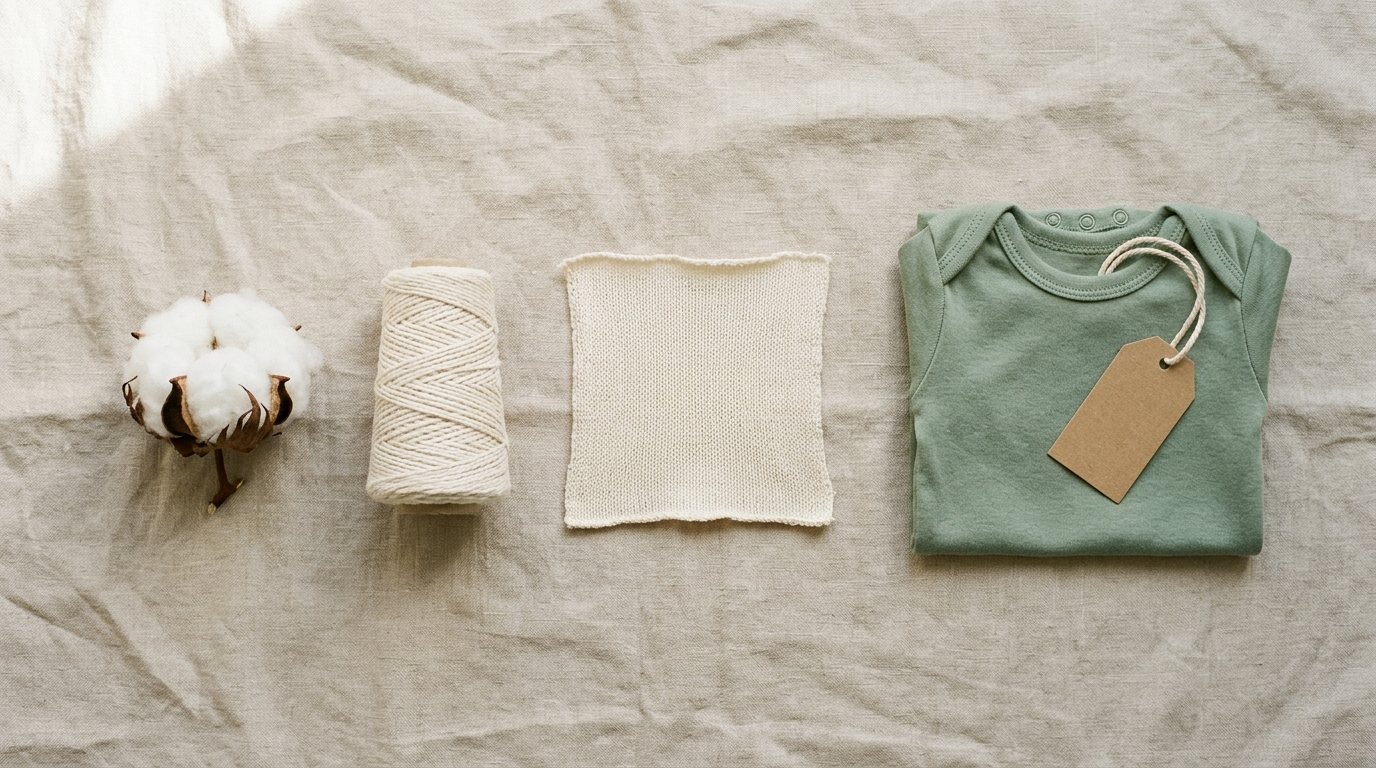
GOTS and OCS both confirm that a product contains organic fibre, but they answer different questions. OCS (Organic Content Standard) verifies how much organic fibre a product contains and traces it from raw material to finished product; GOTS (Global Organic Textile Standard) does that and also sets rules for every processing step after the field, including chemicals, wastewater and social criteria. HC Organize Tekstil holds both as scope certificates at its knitted garment and sock facility in Denizli, Türkiye, so the right choice depends on what your label needs to say and how much organic cotton the product contains.
Below we compare the two standards, explain how a certified order works with us, and list which of our product groups are covered.
What does GOTS certify?
GOTS looks at the whole life of organic fibre once it leaves the field. Every processing step after harvest falls under its rules, which cover the chemicals that may be used, how wastewater is handled and the social conditions in the factories involved. A product can carry one of two GOTS labels:
- "Organic" calls for at least 95% certified organic fibre.
- "Made With Organic" calls for at least 70%.
Below 70%, a product cannot be sold with a GOTS label. In our facility, socks hold the "Made With Organic" registration.
What does OCS certify?
OCS is narrower. It checks what part of the product is organic fibre and follows that fibre from raw material to the finished item. What it certifies is the content; how the fibre is processed lies outside it. That is the main difference from GOTS: OCS sets no chemical, wastewater or social criteria for production.
OCS has two label levels, and below 5% no content claim can be made at all:
- OCS Blended covers products with 5% to 95% organic fibre.
- OCS 100 covers products with 95% organic fibre or more.
In our OCS certificate the product groups are registered as Blended, and the exact organic share of each product appears on its label.
How do GOTS and OCS compare?
| Criterion | GOTS | OCS |
|---|---|---|
| What it certifies | Organic content and every processing step after the field | Organic content and its traceability |
| Chemical, wastewater and social criteria | Yes | No |
| Label levels | "Organic" (95% or more), "Made With Organic" (70% or more) | OCS 100 (95% or more), OCS Blended (5% to 95%) |
| Lowest organic share for a claim | 70% | 5% |
| Registration at HC Organize Tekstil | Scope certificate; socks at "Made With Organic" | Scope certificate held with GRS and RCS; product groups, socks included, at Blended |
Which one fits your product?
Start from the organic share of the fabric or yarn and from what the brand wants the label to say.
- Organic cotton blends below 70%: GOTS labels are not available, so OCS Blended is the standard that can carry the claim.
- 70% or more, with processing criteria on the label: GOTS, at the "Made With Organic" level from 70% and at the "Organic" level from 95%. Brands choose GOTS when they want chemical, wastewater and social criteria to stand behind the claim, not only the fibre content.
- Content traceability only: OCS Blended verifies the organic share without the processing rules.
Whichever standard you choose, the fibre content is decided at the start. For socks that means the yarn, and for knitted garments the fabric; both are sourced to order, as described on our fibres and raw materials page.
What do the scope certificate and the Transaction Certificate show?
Two separate documents are involved, and buyers often mix them up: one proves that a factory may produce certified goods, the other proves that a given shipment is certified.
- Scope certificate. This is the facility's permission to produce to GOTS or OCS. The GOTS and OCS certificates we hold are scope certificates.
- Order. Your order names, in writing, the standard and the label that production should meet, and the raw materials and supply chain are arranged to match.
- Transaction Certificate (TC). It is issued by the certification body and confirms that the goods in the shipment named on it are certified; one TC can cover more than one shipment. We provide TCs for GOTS, OCS, GRS and RCS orders.
So a scope certificate alone does not make a shipment certified; a shipment that carries an organic claim has to be covered by a TC. If your product will carry such a claim, say so when you order.
Which of our products are within scope?
The scope of our GOTS certificate includes clothing for women, men and children, unisex clothing and babywear, and babywear is listed in it as a separate category. OCS, GRS and RCS share one scope certificate, whose scope includes clothing for women, men and children, unisex clothing and fabric. In practice:
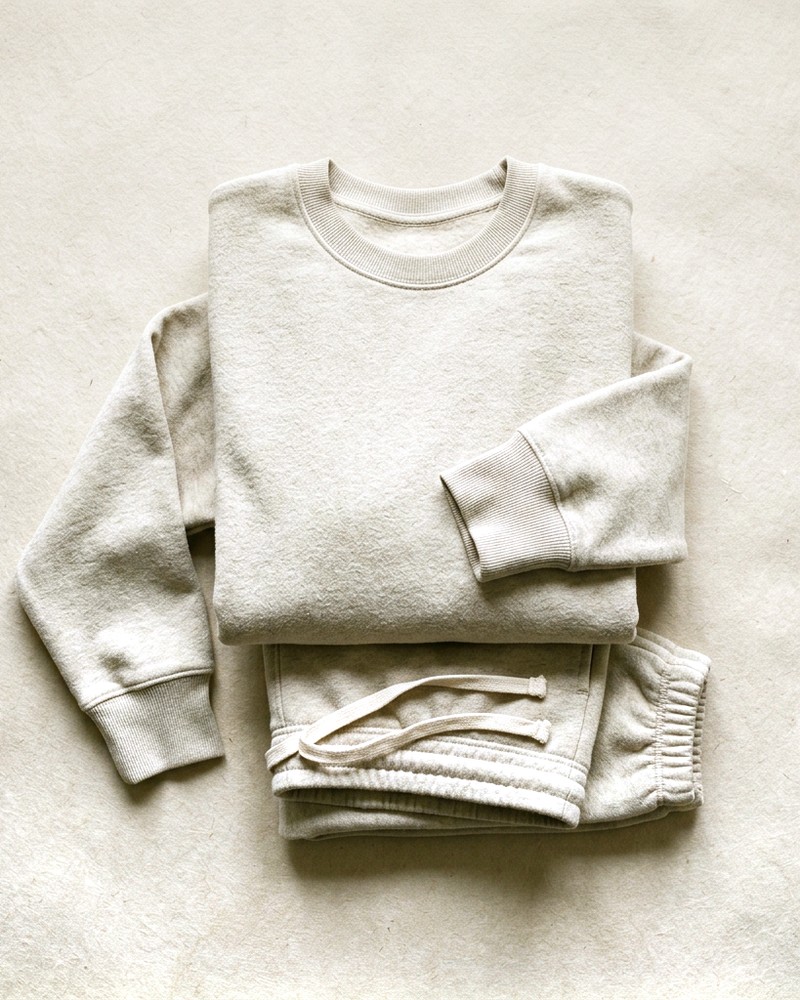
- Organic cotton loungewear: within the scope of both our GOTS and our OCS certificates, under the women's, men's and unisex clothing categories.
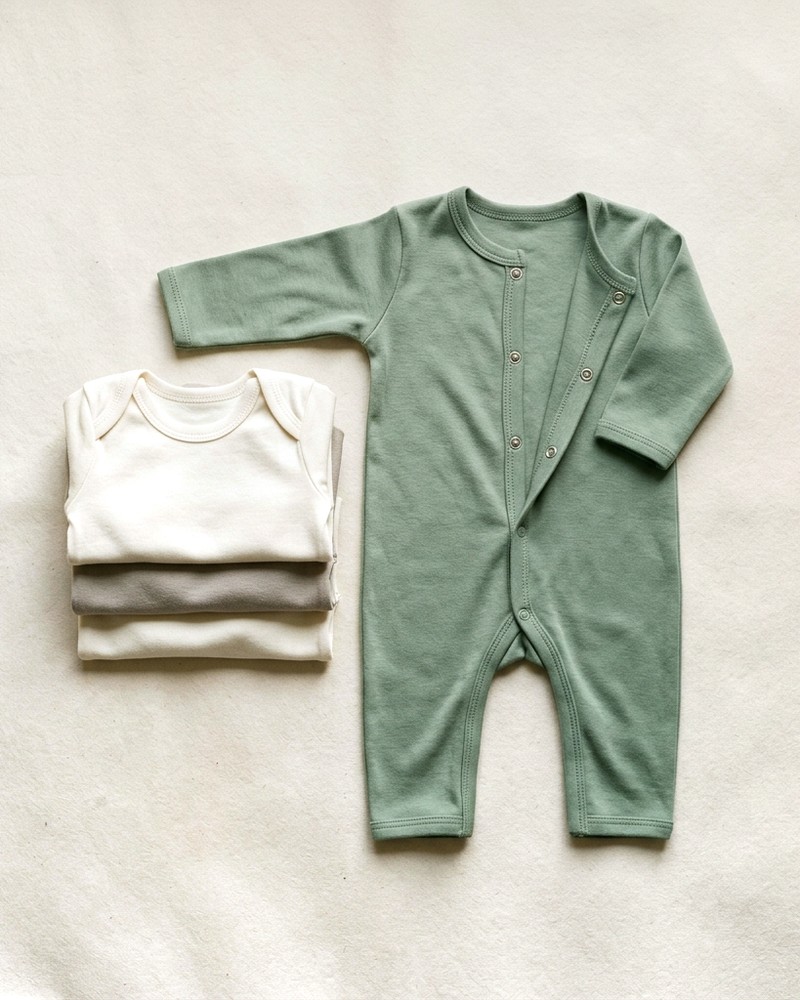
- Organic cotton babywear: listed in our GOTS scope certificate as a separate category.
- Kidswear: covered by both certificates.
- Socks: registered under GOTS as "Made With Organic" and under OCS as Blended.
For products outside the certificate scope, certification status is confirmed before the order. The full scope of each certificate is on our certifications page.
Frequently asked questions
Is OEKO-TEX Standard 100 an organic certificate?
No. OEKO-TEX Standard 100 tests the finished product for harmful substances against limits set for human health; it says nothing about whether the fibre is organic or recycled. We hold it as two certificates, Class I for baby products and Class II for everyday clothing worn next to the skin.
Do we need a Transaction Certificate for every shipment?
Every shipment that will carry the organic claim has to be covered by a TC, and one TC can cover more than one shipment to the same buyer. State the standard and the label level in writing when you order.
Where does the organic share appear on the product?
On its label. The label shows the share of organic fibre and the standard and level the product is certified to (for example GOTS "Made With Organic" or OCS Blended).
Can recycled fibre be certified the same way?
Yes, under different standards. For recycled content our GRS and RCS scope certificates apply; GRS adds social, environmental and chemical criteria, while RCS verifies the recycled content and its traceability.
Request a quote
A tech pack and a target quantity are enough for a quote. Tell us in our quote form which standard and label level the product should carry, and we will plan the fabric or yarn accordingly.


