OEKO-TEX Standard 100 Class I vs Class II: which applies to babywear and underwear?
OEKO-TEX Standard 100 is a test for harmful substances, and it divides its limit values into classes according to how close to the skin the product is worn. The difference between Class I and Class II, which certificate covers babywear, underwear and our other product groups at HC Organize Tekstil, and what to ask before ordering.
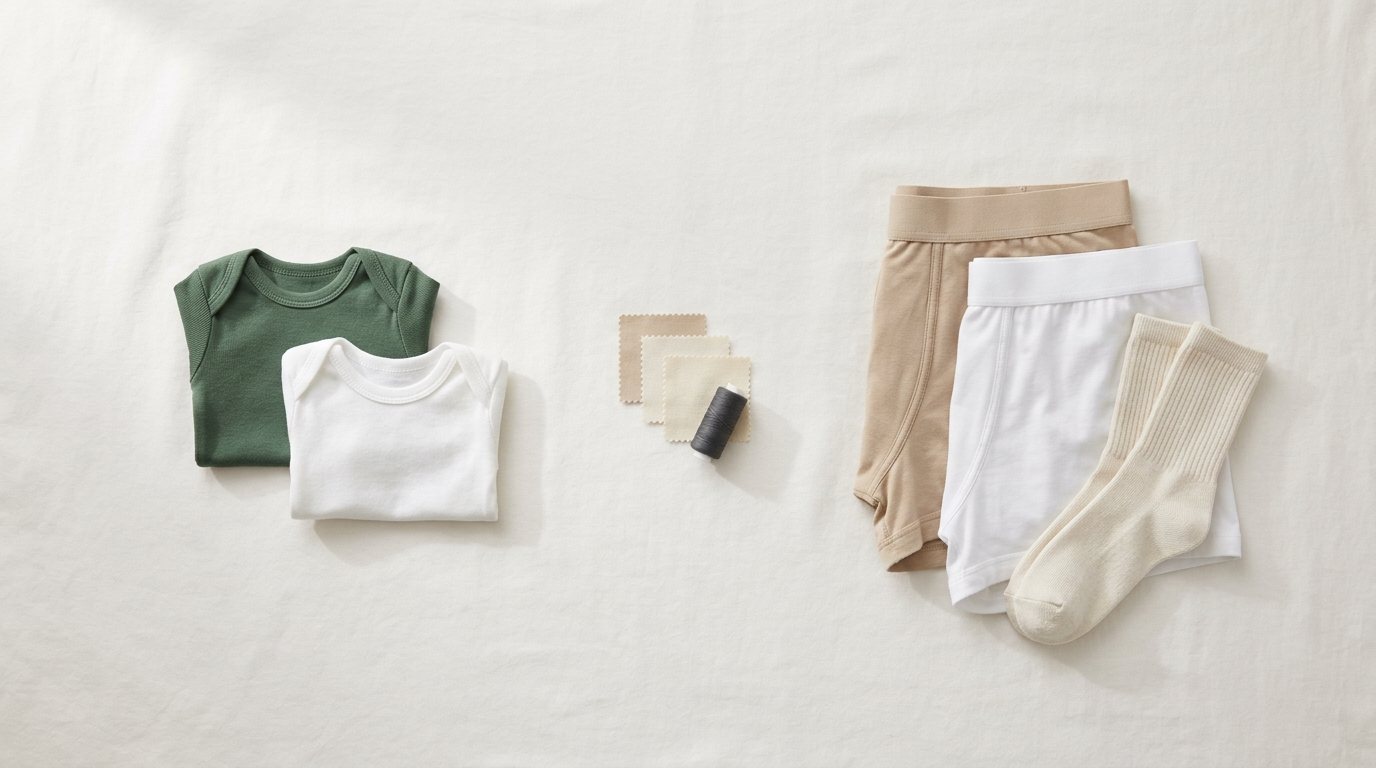
OEKO-TEX Standard 100 tests whether a finished product and all its components comply with the standard's limit values for harmful substances. The limit values are divided into classes according to how close to the skin the product is worn. Class I has the strictest limit values of the standard, and products for babies and toddlers up to 36 months are tested in this class; Class II is for products in direct contact with the skin, such as underwear, T-shirts and socks. HC Organize Tekstil holds two separate certificates for the two classes: baby products are in our Class I certificate, and most underwear is in our Class II certificate.
Below we explain the difference between the two classes, which one applies to babywear and underwear, and what a buyer should ask before ordering.
What does OEKO-TEX Standard 100 test?
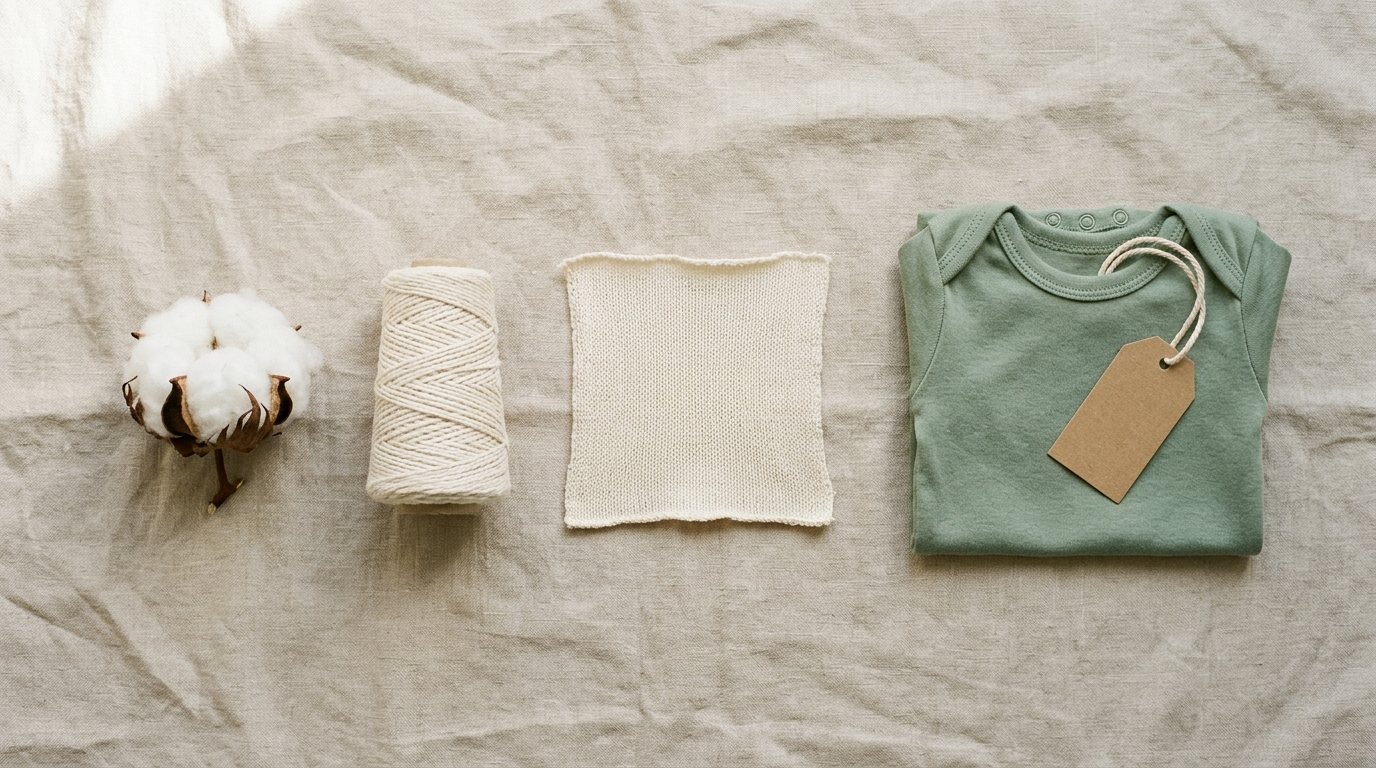
The test looks at the finished product and every part it is made of. In a baby bodysuit that means more than the fabric: components such as sewing thread, elastic, labels and prints are tested too. The result shows whether the product complies with the limit values of its class.
There are also things the certificate does not show. OEKO-TEX Standard 100 does not look at where the fibre comes from: it does not show whether the fabric is made from organic cotton or recycled polyester. Organic content is certified under GOTS and OCS, recycled content under GRS and RCS. We describe these content standards separately in our GOTS vs OCS post.
What is the difference between Class I and Class II?
The difference is who the product is for and how close to the skin it is worn. OEKO-TEX Standard 100 also has further classes for products with little skin contact and for decoration materials; for babywear and underwear, Class I and Class II are the ones that matter.
| Criterion | Class I | Class II |
|---|---|---|
| Products | Products for babies and toddlers up to 36 months | Products in direct contact with the skin (for example underwear, T-shirts, socks) |
| Limit values | The strictest limit values of the standard | Limit values set for products in direct contact with the skin |
| Registration at HC Organize Tekstil | Baby products; Women's period underwear; Men's underwear with absorbent layers | Casual wear, promotional wear and sportswear. In the certificate: Socks; T-shirts and sweatshirts; Trousers; Underwear |
In practice, separate certificates for the two classes mean that the class a product was tested in is shown by the certificate in which it is registered. A product listed in the Class II certificate does not automatically fall within Class I.
Which class applies to babywear?
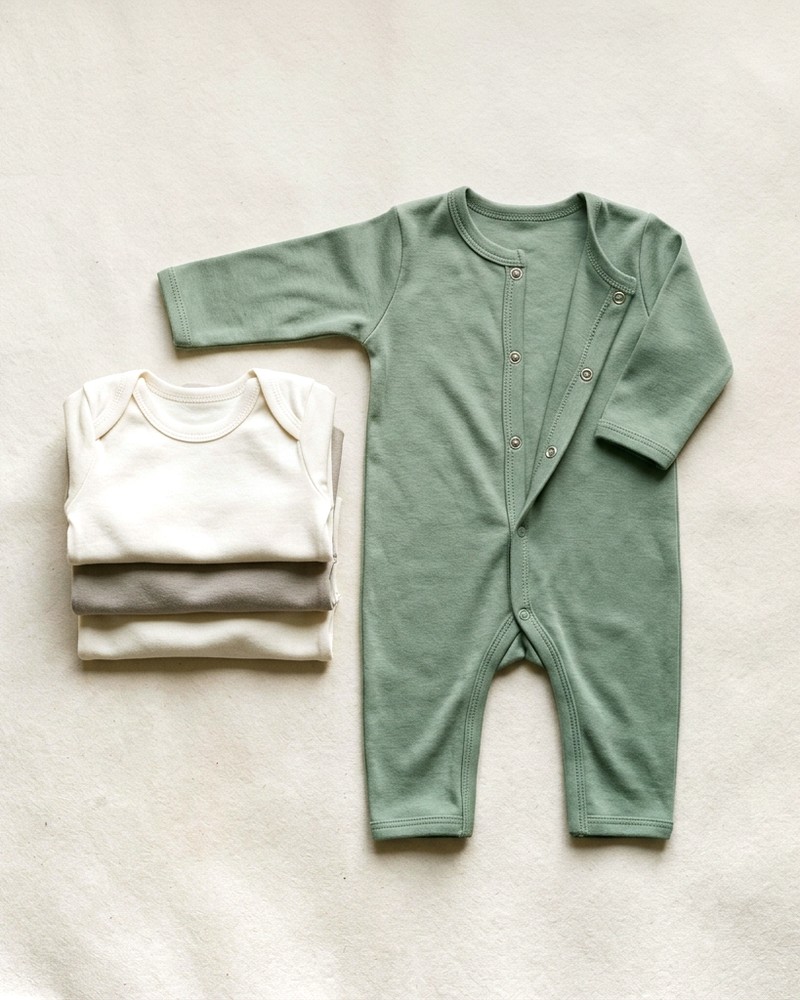
Class I. Baby products up to 36 months are tested in this class, and our babywear products are in our Class I certificate: baby vests, bodysuits, rompers and baby sets.
In kidswear the limit is 36 months. Children's products above 36 months are tested under our Class II certificate; if a collection includes both baby and children's sizes, the two groups are in different certificates.
If organic cotton babywear is required, GOTS also applies; babywear is listed as a separate category in our GOTS scope certificate.
Which class applies to underwear?
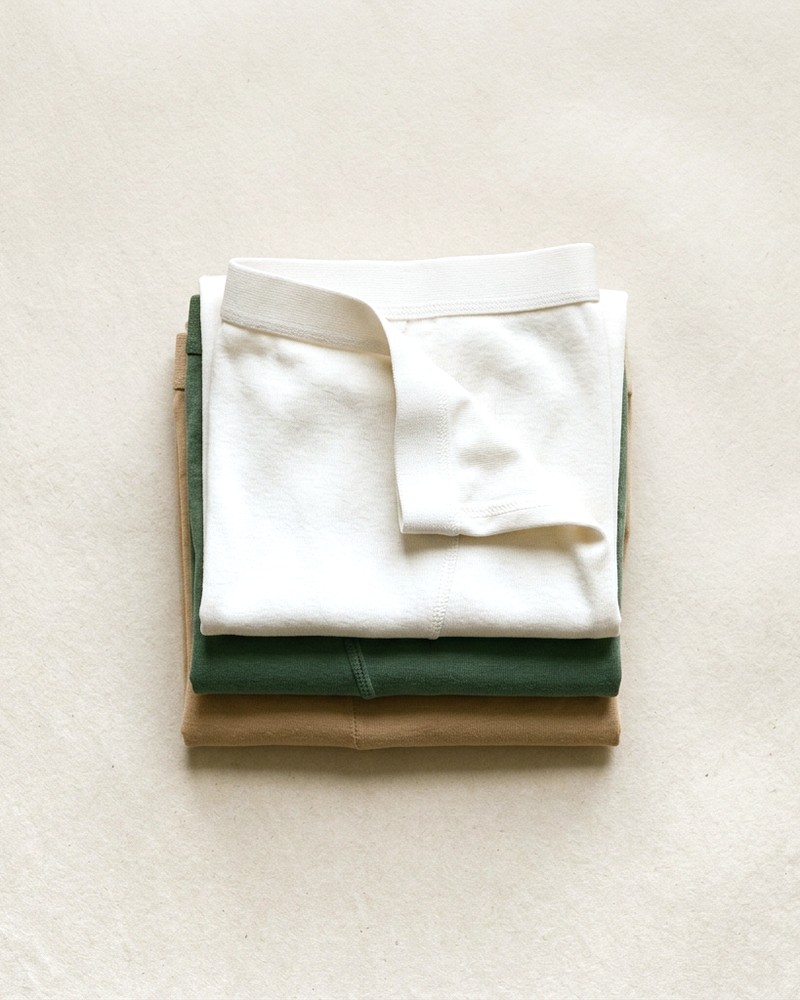
It depends on the product. Most of our underwear products, that is briefs, boxers, vests and bodysuits, are in our Class II certificate; underwear is tested in this class as a product in direct contact with the skin.
Two underwear products, however, are registered in our Class I certificate: women's period underwear and men's underwear with absorbent layers. Both are products with absorbent layers; the layer construction is developed together with the product and approved on the sample. For all other underwear, the certificate that applies is Class II.
If the label will also carry a fibre claim, our GOTS or OCS scope certificate applies to organic cotton underwear, and our GRS or RCS scope certificate to underwear with recycled fibre.
Which class do our other product groups fall under?
These product groups are in our Class II certificate:
- Socks: Class II.
- Sportswear and yogawear: Class II, as sportswear.
- Promotional wear: explicitly listed within the scope of our Class II certificate.
- Loungewear: Class II, as casual wear.
- Kidswear: products above 36 months are in Class II.
For products outside the certificate scope, certification status is confirmed before the order.
What should a buyer ask before ordering?
When you work with a manufacturer that holds an OEKO-TEX certificate, the real question is not whether the certificate exists but whether your product is in it. Clarify these points before ordering:
- Which class should the product be tested in? A baby product up to 36 months requires Class I, a product in direct contact with the skin Class II.
- Which of the manufacturer's certificates is the product group registered in? If Class I and Class II are separate certificates, ask which one your product is in.
- A current copy of the certificate and its product list. See which products are listed in the certificate; we also send current certificates on request.
- Does the collection include products that fall into different classes? If baby and children's sizes, or plain underwear and underwear with an absorbent layer, are in the same order, check the certificate for each group separately.
- Is a fibre claim needed? If organic or recycled content will be stated on the label, specify in writing in the order which standard and which label level you require; in that case, the shipment also needs a Transaction Certificate.
Frequently asked questions
Is a Class II certificate enough for baby products?
No. Baby products up to 36 months are tested in Class I. That is why our baby products are in a separate Class I certificate.
Which class applies to kidswear?
The limit is 36 months: our Class II certificate applies to children's products above this age, and our Class I certificate to baby products up to it.
Does OEKO-TEX Standard 100 also show organic cotton?
No. It is a test for harmful substances; it does not show whether the fibre is organic or recycled. Fibre content is certified under GOTS, OCS, GRS or RCS, and labelled shipments also need a Transaction Certificate.
Can we see your certificates?
Yes. We send current certificates on request. What each certificate covers is set out on our certifications page.
Request a quote
A tech pack and a target quantity are enough for a quote. Tell us in our quote form which OEKO-TEX class the product should be certified to and, if needed, which fibre standard, and we will plan production accordingly.